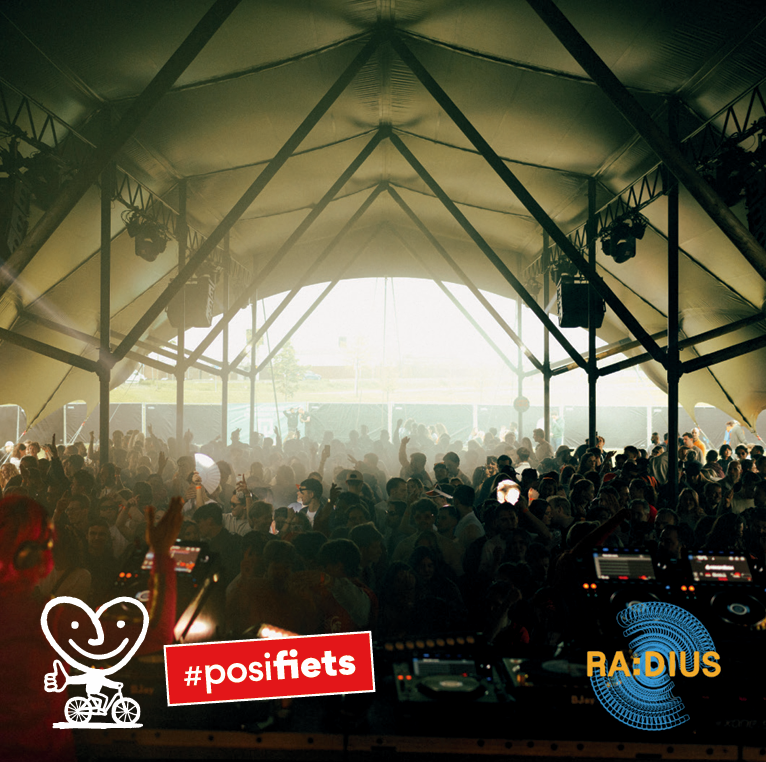
Bicycle parking in the spotlight: together with young people at Ra:dius Festival
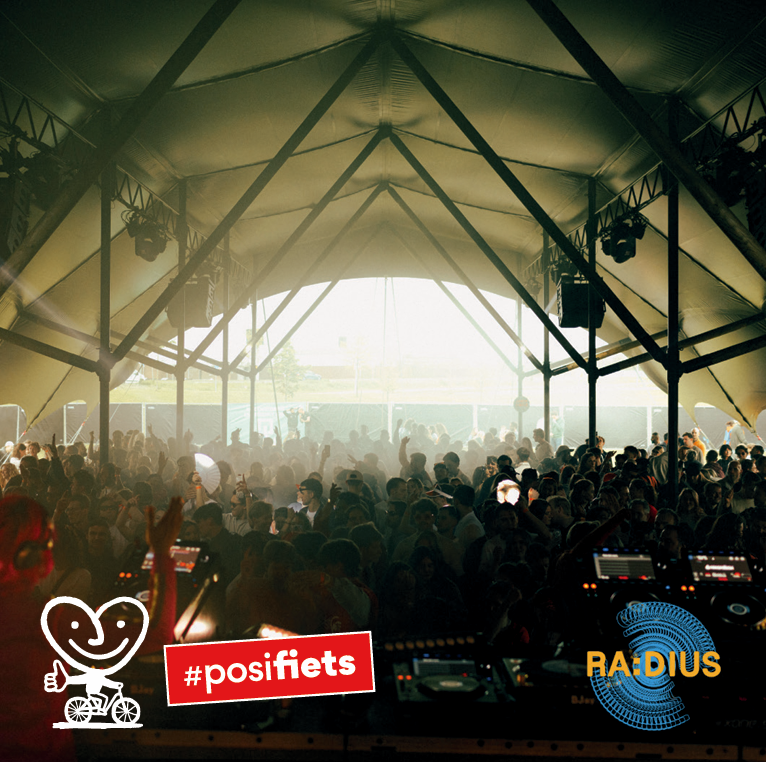
A concrete example of how we reach young people in an approachable and interactive way is our presence at events such as the Ra:dius Festival during King's Day in the Frontenpark. Here, we talk to festival-goers about their cycling behaviour and give practical tips on how to park bikes correctly. With playful actions and an informal approach, we make students aware of their influence on the accessibility of the city, without being pedantic. By responding to their lifestyles and experiences, we increase the impact of our message.
From awareness to behavioural change
Cycling is the way to get around the city quickly and sustainably. But if bicycles are parked haphazardly, they can be an obstacle for people with physical or visual impairments, parents with prams and other pedestrians. In Maastricht, we therefore work with various partners to raise awareness of the importance of correct bicycle parking.
Camiel Pesch - Organisation Ra:dius Festival: ‘As Ra:dius Festival, we think it is important to promote sustainable mobility. Hence, we have had a partnership with #posifiets from the first year of our festival. With this cooperation, we motivate our visitors to come to the festival by bike and park their bikes in the right way. As a result, 83% of our visitors now come to the festival by bike.’
An integrated approach with local partners
To communicate the approach effectively, we use a network of cooperation partners. These include Swapfiets, which actively informs their customers about the correct parking locations, and landlords of (student) properties, who take this message into account when handing over keys and in their communication to tenants. Business owners in the city also play a role, as illegally parked bicycles are often left in front of their shops and catering establishments.
An essential link in this approach are the faculties of Maastricht University (UM). By sharing information via newsletters, introduction meetings and digital communication channels, the message is brought directly to students' attention. In addition, visible and clear signage and campaigns around bicycle parking facilities ensure that students are actively made aware of the right places to put their bikes.
From awareness to behavioural change
Merely informing is not enough. Through repetition, offering practical alternatives (such as extra bicycle parking spaces) and encouraging social norm formation - for example, by having students address each other - proper parking behaviour becomes the norm. Here, cooperation with the municipality and enforcement is very important, so that incorrectly parked bicycles are removed in time and the consequences are clear.
A city that remains accessible for all
This joint effort contributes to a pleasant and accessible city for everyone. By informing students structurally through the right channels and with the right partners, we ensure that bicycle parking policy is not just a rule, but a natural part of responsible use of public space.
Want to know more about this approach or work together for a more accessible city? Contact our team and join this movement!